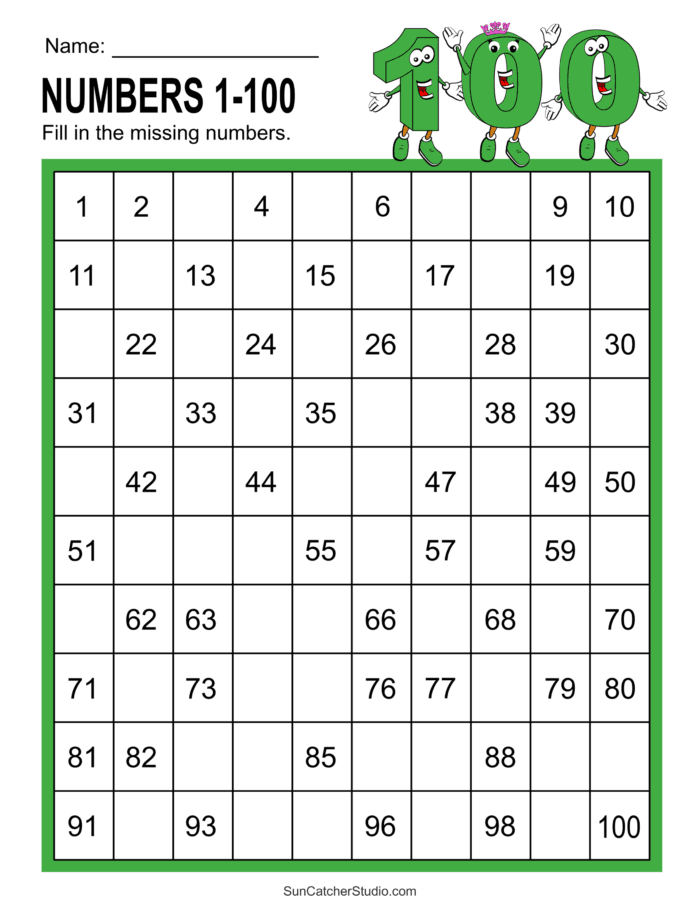
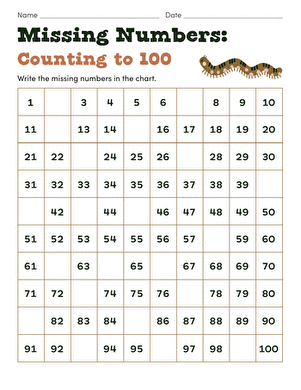
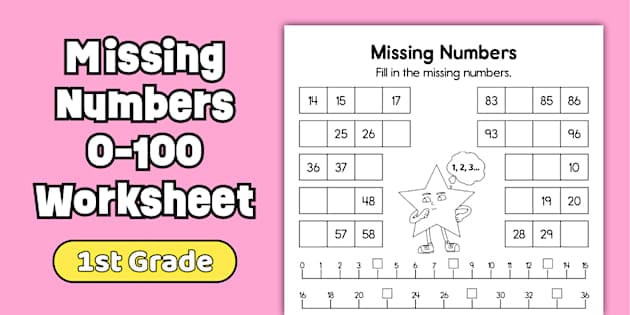
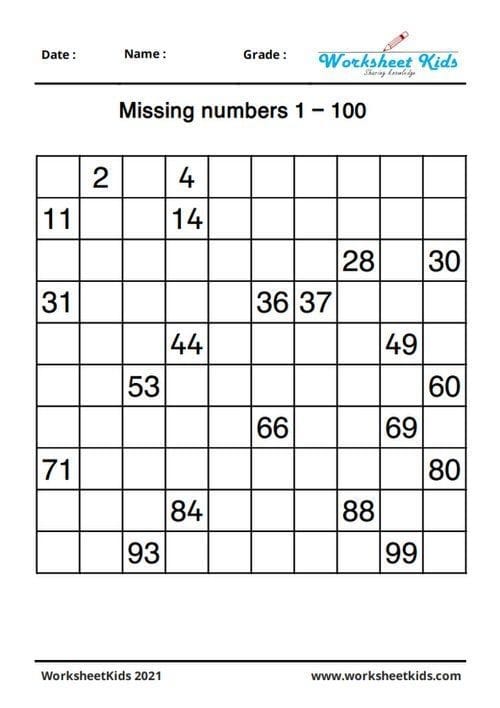
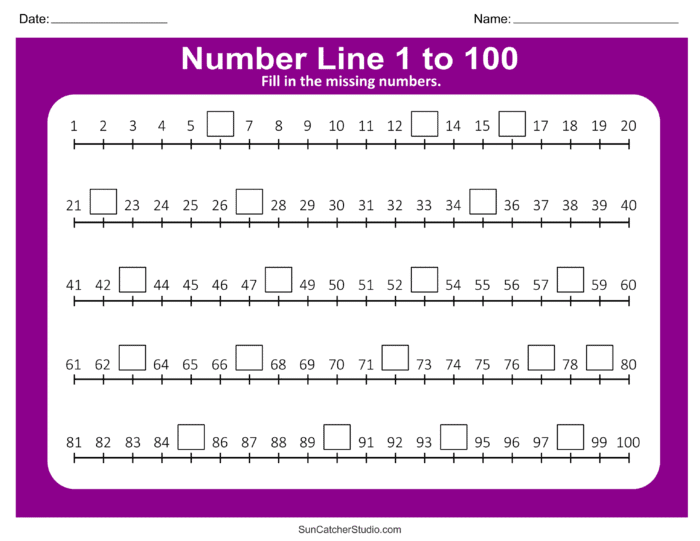
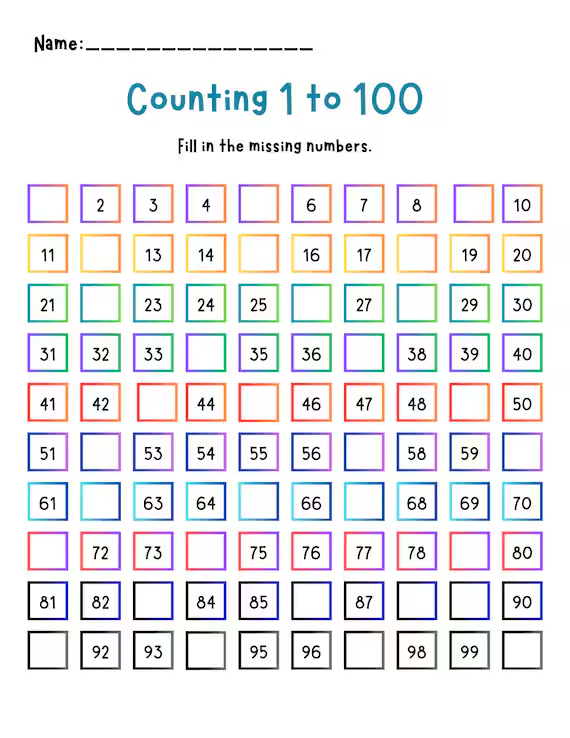
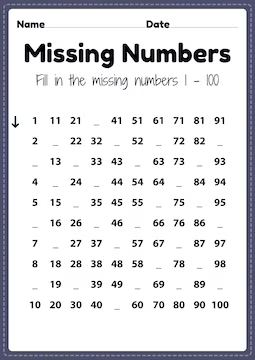
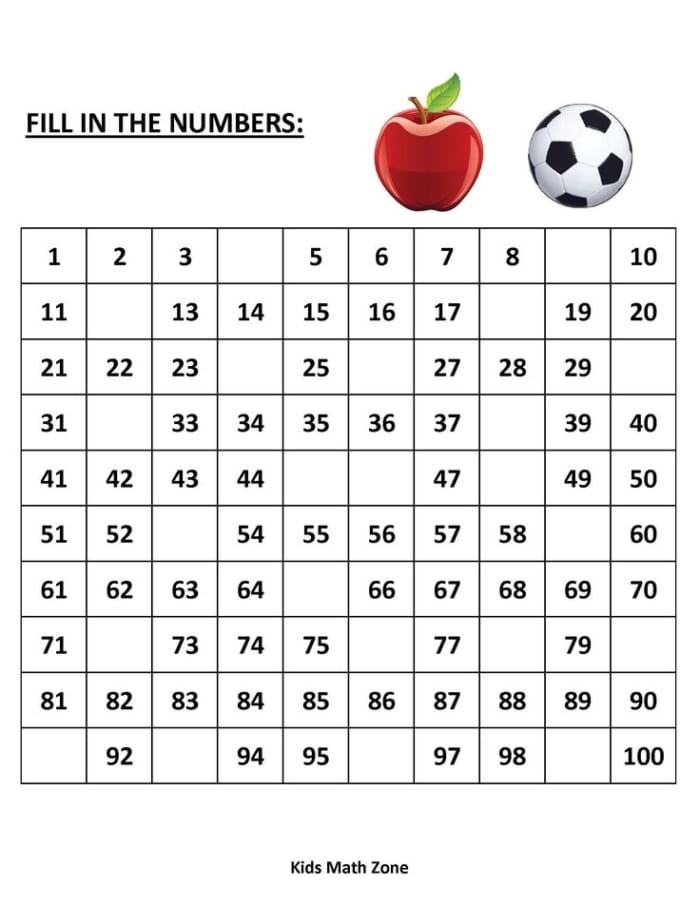
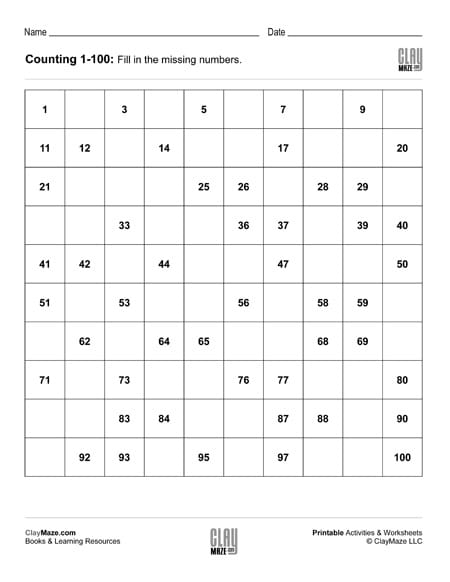
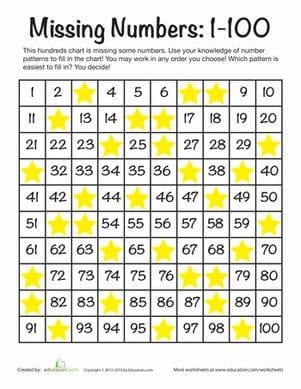
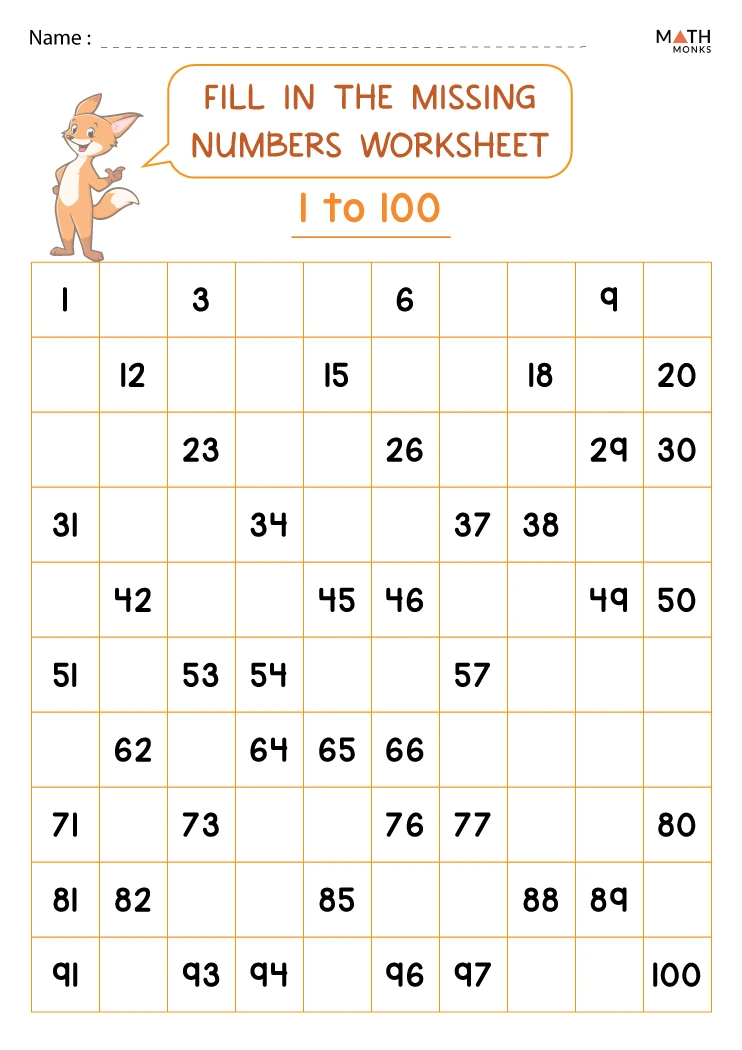
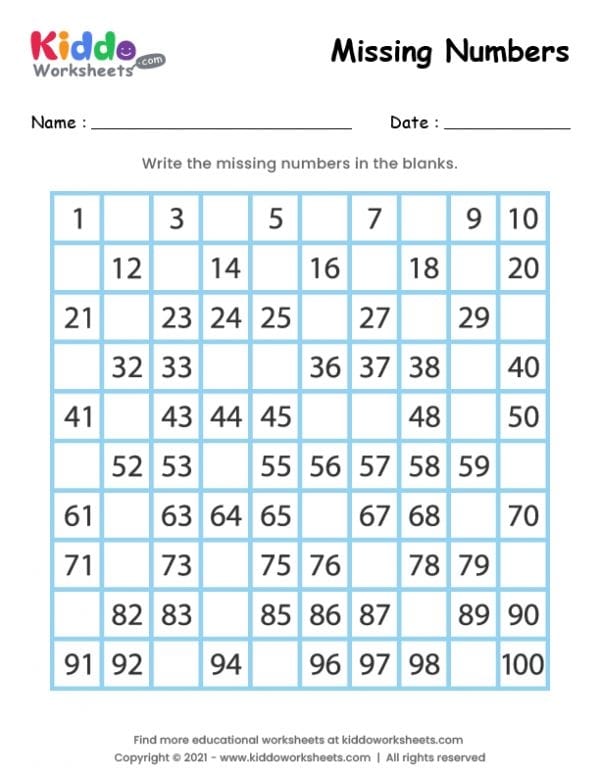
A hundred chart with missing numbers is one of the most effective tools for building number sense in young learners. When kindergarteners and first graders fill in the gaps themselves, they’re not just memorizing sequences, they’re understanding how numbers relate to one another and how our counting system actually works.
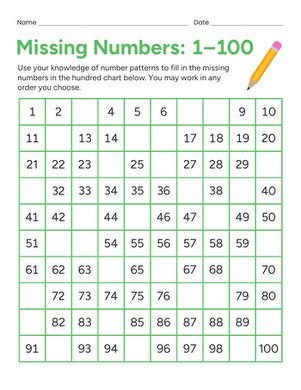
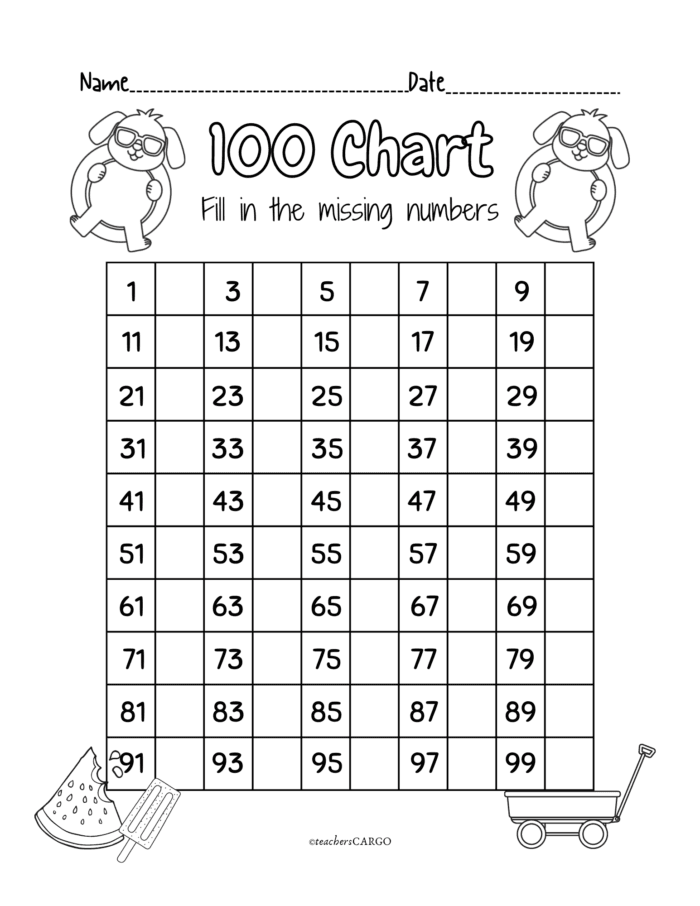
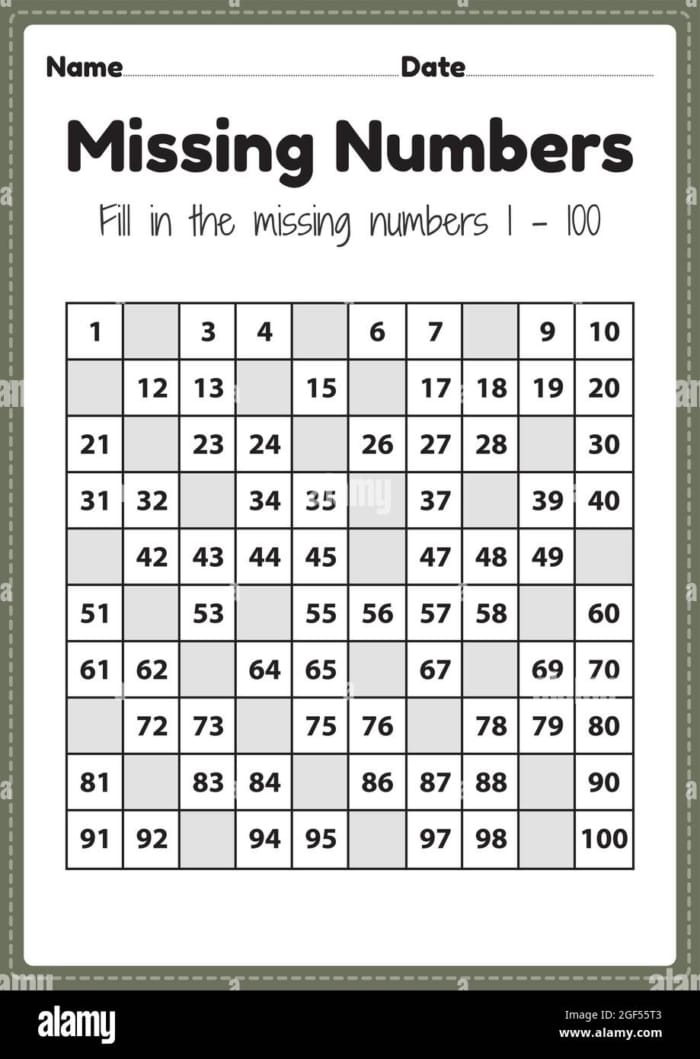
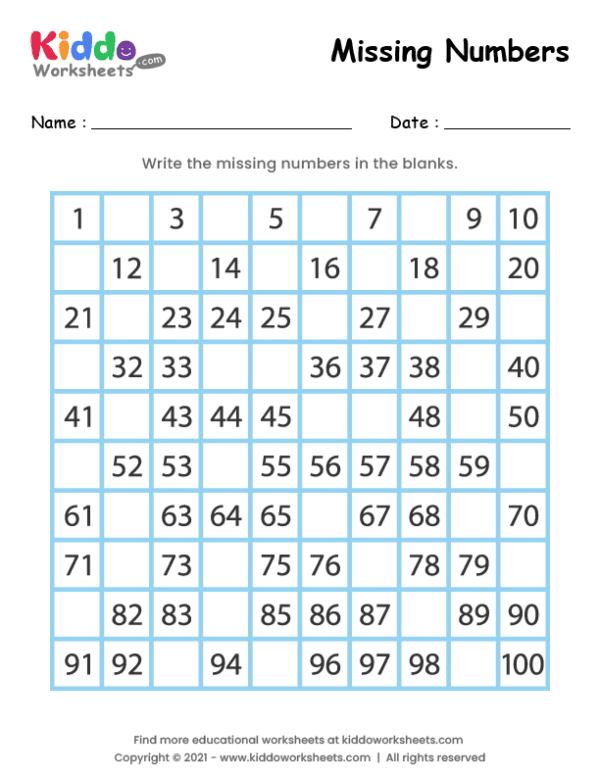
The beauty of this activity lies in its simplicity. You present a chart with numbers 1 through 100, but with random numbers removed. Students then figure out what belongs in each empty space. This forces them to think about number order, skip counting patterns, and the logic behind our base-ten system. A child who can complete a hundred chart has internalized counting in a way that rote recitation alone never achieves.
What makes this approach stick is the visual reinforcement. Seeing numbers arranged in rows of ten helps young learners recognize that 11 comes after 10, that 21 is directly below 11, and that each new row follows the same pattern. This spatial understanding becomes the foundation for addition and subtraction later on.
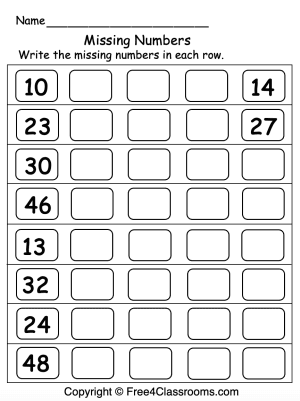
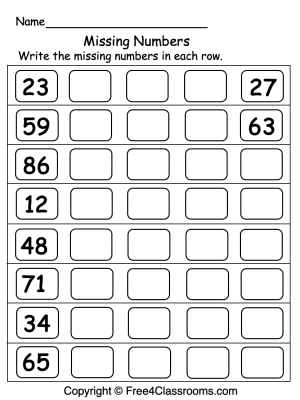
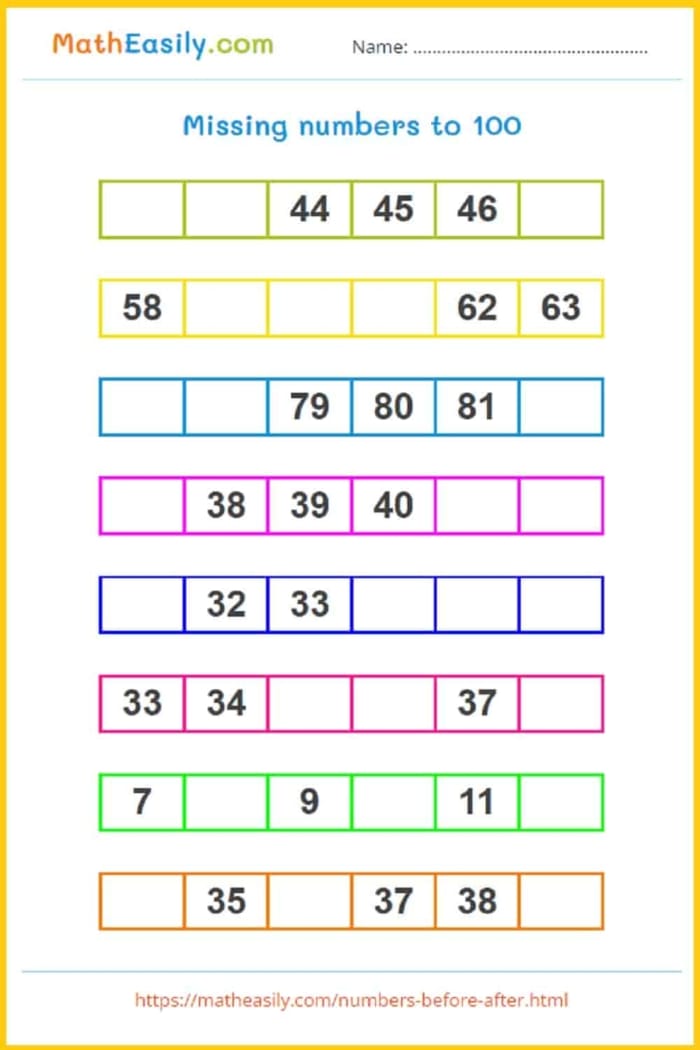
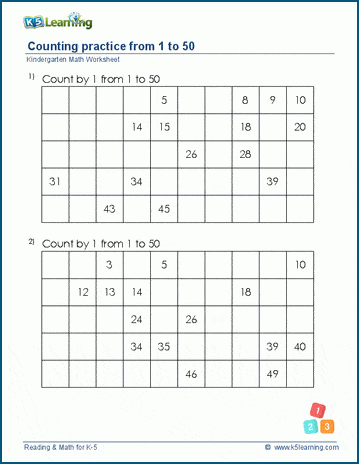
You can vary the difficulty based on your students’ readiness. Start by removing just a few numbers from random positions, then gradually increase the challenge. Some children might benefit from counting activities focused on specific number ranges like 11-20 before tackling the full hundred chart.
Beyond the standard worksheet, you can incorporate this practice into other engaging formats. Try pairing it with connect-the-dots activities that reinforce number order, or use thematic worksheets that embed the hundred chart into real-world scenarios. These variations keep the core skill fresh while maintaining student interest.
The hundred chart remains a cornerstone of kindergarten and first-grade mathematics instruction because it works. Students gain fluency with numbers 1-100 while developing the mental math strategies they’ll rely on for years to come.
Printable Worksheets for Practice